Furolog
Are sauna calories real? Why heart rate calorie estimates go wrong in the heat
Your watch says you burned 400 calories sitting still. It is counting your heart rate, and in a sauna your heart rate is lying to it. Here is what is actually happening and what is worth measuring instead.
Updated September 4, 2026
Search "sauna calories" and you will find confident numbers: 300, 500, 600 calories in a session. Your watch may show something similar. The numbers are not made up. They are the output of a formula being fed the wrong input.
Sauna calories are real but small. Your body does burn more in the heat than on the sofa, on the order of 50 to 130 kcal per 10 minute round in the one study that measured it round by round, and a whole session lands in the low hundreds. The watch shows far more because it converts heart rate to calories with a formula built for exercise, and in a sauna your heart rate rises for cooling, not for work. The weight you lose on the scale is sweat, and it comes back when you drink.
Where the number comes from
Almost every wearable estimates calories from heart rate. The logic is sound for exercise: when you run, your muscles consume oxygen, and your heart rate rises in proportion to how much oxygen you are using. Oxygen consumption is a good proxy for energy burned, so heart rate becomes a good proxy for calories. The standard formulas are calibrated on people exercising, and for exercise they work reasonably well.
The assumption underneath is that a higher heart rate means more oxygen being consumed. In the sauna, that assumption breaks.
Why heart rate rises without the work
In a sauna your heart rate climbs to 110, 130, sometimes 150 bpm. But your muscles are doing nothing. The extra heartbeats are pumping blood to your skin so heat can leave your body, and skin blood flow in serious heat can reach 6 to 8 litres a minute. That is cooling, not work. A 2019 study found that heart rate and blood pressure during a 25 minute sauna at 93°C matched a dynamic exercise test at about 60 to 100 watts, and a review of Finnish sauna physiology describes the same picture: a cardiovascular response resembling moderate to hard exercise, without the muscular work. Your oxygen consumption goes up a little, because a hotter body runs its chemistry slightly faster, but nowhere near what the same heart rate would mean on a run.
A calorie formula cannot see the difference. It sees 140 bpm, assumes you are jogging, and credits you with a jog. Twenty minutes of that produces a number that would be right for twenty minutes of jogging and is wrong for twenty minutes of sitting in a hot room.
Dehydration makes it worse. As you sweat and your blood volume drops, heart rate rises again to hold blood pressure. That is another increase in the input with no increase in the work.
How many calories does a sauna actually burn?
Sitting at rest, an adult burns roughly one to one and a half calories a minute. In a sauna, metabolic rate rises modestly because of the heat load. The most detailed measurement we know of is a 2019 study of overweight young men doing four 10 minute rounds at 90°C with 5 minute breaks: device-estimated energy expenditure was 73, 94, 115, and 131 kcal per round, about 333 kcal for the whole hour, with the later rounds costing more as the body heated up. Passive heat in general works the same way: an hour in a 40°C bath raised energy expenditure by about 61 kcal an hour over rest in one study, a 79% increase but still only a light activity.
So roughly 50 to 130 kcal per round depending on body size and heat, and a full three-round session likely in the low hundreds, mostly from the rounds adding up. That is not nothing. It is also not 600, and it is far below what an exercise formula gives for the same heart rate.
Then why does the scale drop?
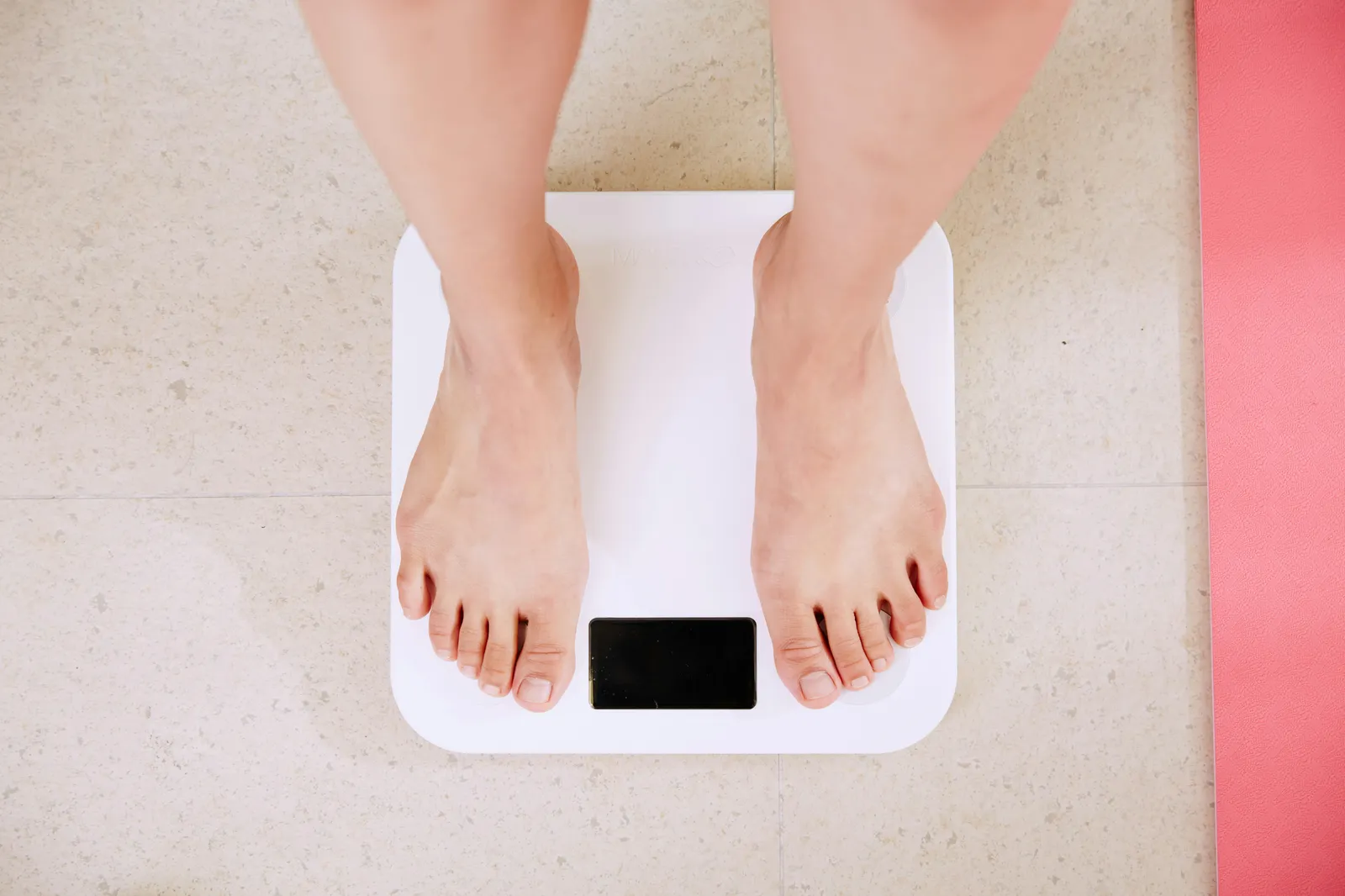
Because you lost water. In the 4 × 10 minute study above, body mass fell by 0.65 kg over the hour, almost all of it sweat, and a kilogram of water on the scale looks exactly like a kilogram of anything else. Drink normally over the next day and the weight comes back, because it was never fat.
This is the mechanism behind every "lose weight in the sauna" claim and every wrestler cutting to a weigh-in. It works, temporarily, and it has nothing to do with calories.
What the sauna is actually good for
The measurable effects of sauna bathing are cardiovascular, not caloric. Heart rate and blood pressure respond as they would to light exercise. Recovery afterwards shows a drop in resting heart rate and a return of heart rate variability, which is the parasympathetic rebound people describe as feeling reset; in a 2019 study, heart rate was 68 bpm after 30 minutes of recovery against 77 before the sauna. Regular use is associated in Finnish cohort studies with lower cardiovascular risk: in a 20 year follow-up of 2,315 men, those using the sauna 4 to 7 times a week had less than half the rate of sudden cardiac death of once-a-week users, and a later cohort found the same direction in women. An 8 week randomised trial found that adding a 15 minute sauna after exercise improved fitness, blood pressure, and cholesterol more than exercise alone. Those are the things worth tracking.
Heart-rate trends can provide more useful session context than a calorie estimate, especially when you compare your own sessions over time. They do not measure fitness or diagnose recovery on their own. See sauna heart rate: what is normal for a cautious way to read them.
If you want to use the sauna for weight
Then use it for what it does: it makes exercise recovery more pleasant, it may help you sleep, and it gives you a reason to spend an hour without a phone. Do the exercise elsewhere, drink back what you sweated, and treat the calorie number on the watch as a rough measure of how hot the room was.
Read next: Sauna heart rate: what's normal? · How long in the sauna, cold plunge, and rest?
Sources
- Keytel LR, et al. "Prediction of energy expenditure from heart rate monitoring during submaximal exercise." J Sports Sci. 2005;23(3):289-297. https://doi.org/10.1080/02640410470001730089
- Charkoudian N. "Mechanisms and modifiers of reflex induced cutaneous vasodilation and vasoconstriction in humans." J Appl Physiol. 2010;109(4):1221-1228. https://doi.org/10.1152/japplphysiol.00298.2010
- Ketelhut S, Ketelhut RG. "The blood pressure and heart rate during sauna bath correspond to cardiac responses during submaximal dynamic exercise." Complement Ther Med. 2019;44:218-222. https://doi.org/10.1016/j.ctim.2019.05.002
- Heinonen I, Laukkanen JA. "Effects of heat and cold on health, with special reference to Finnish sauna bathing." Am J Physiol Regul Integr Comp Physiol. 2018;314(5):R629-R638. https://doi.org/10.1152/ajpregu.00115.2017
- Podstawski R, et al. "Correlations between repeated use of dry sauna for 4 x 10 minutes, physiological parameters, anthropometric features, and body composition in young sedentary and overweight men." Biomed Res Int. 2019;2019:7535140. https://doi.org/10.1155/2019/7535140
- Faulkner SH, Jackson S, Fatania G, Leicht CA. "The effect of passive heating on heat shock protein 70 and interleukin-6: a possible treatment tool for metabolic diseases?" Temperature. 2017;4(3):292-304. https://doi.org/10.1080/23328940.2017.1288688
- Laukkanen T, et al. "Recovery from sauna bathing favorably modulates cardiac autonomic nervous system." Complement Ther Med. 2019;45:190-197. https://doi.org/10.1016/j.ctim.2019.06.011
- Laukkanen T, Khan H, Zaccardi F, Laukkanen JA. "Association between sauna bathing and fatal cardiovascular and all-cause mortality events." JAMA Intern Med. 2015;175(4):542-548. https://doi.org/10.1001/jamainternmed.2014.8187
- Laukkanen T, et al. "Sauna bathing is associated with reduced cardiovascular mortality and improves risk prediction in men and women: a prospective cohort study." BMC Med. 2018;16:219. https://doi.org/10.1186/s12916-018-1198-0
- Lee E, et al. "Effects of regular sauna bathing in conjunction with exercise on cardiovascular function: a multi-arm, randomized controlled trial." Am J Physiol Regul Integr Comp Physiol. 2022;323(3):R289-R299. https://doi.org/10.1152/ajpregu.00076.2022
Quick answer
- The watch number: a heart rate formula built for exercise, fed a heart rate that rose for cooling. It overestimates badly.
- Real burn: modestly above resting. Roughly 50 to 130 kcal per round depending on body size and heat; a session lands in the low hundreds, not 600.
- The scale: water. It comes back when you drink.
- Track instead: heart rate climb, peak, and recovery. That is where the sauna's real effect is.