Furolog
Vihta: the birch whisk, and why Finns hit themselves with trees in the sauna
A bundle of birch branches, soaked and used to slap the skin in the heat. What it does, how it is made, why half of Finland calls it vasta, and what your watch makes of it.
Updated September 4, 2026
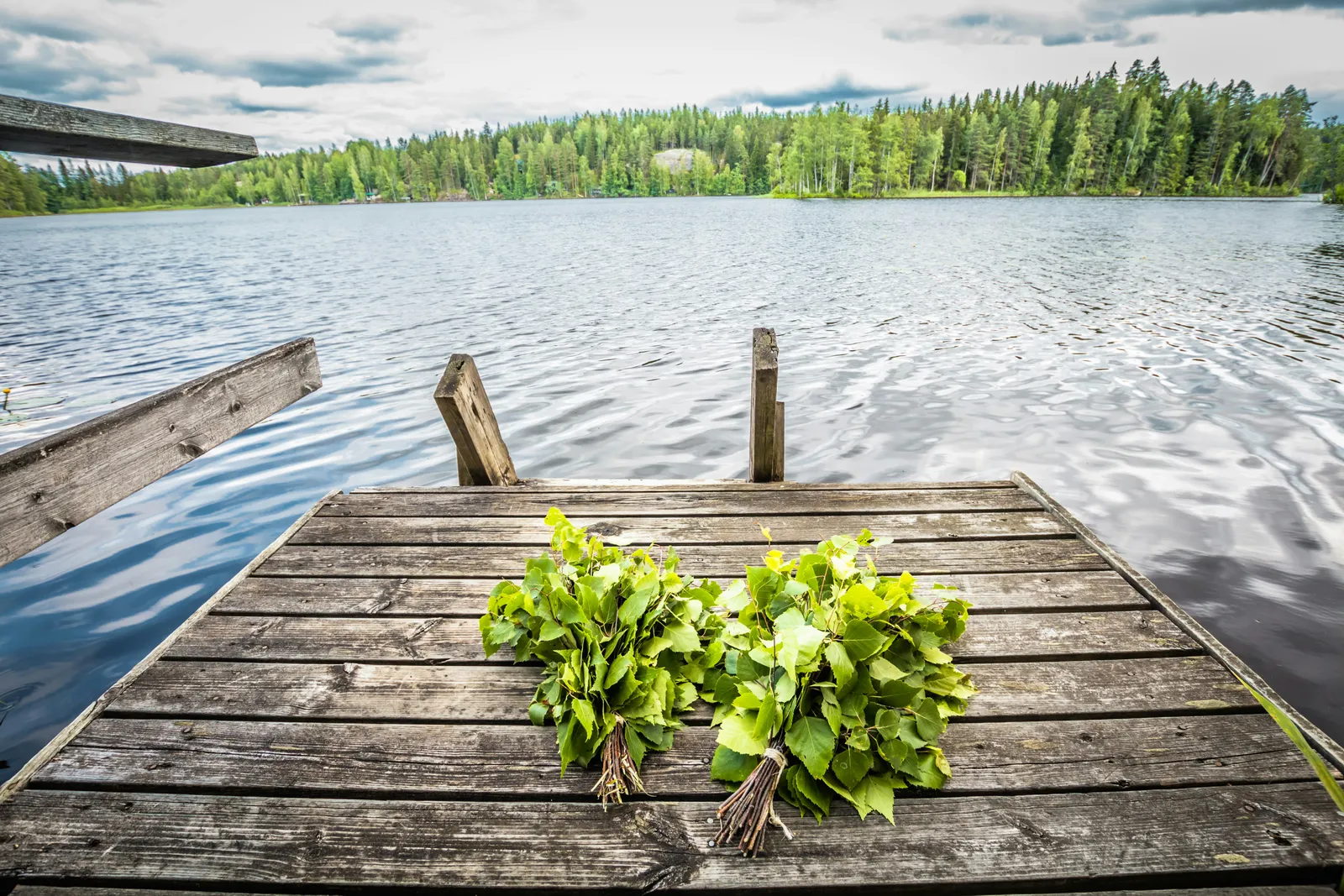
Walk into a Finnish sauna in July and there will be a bundle of leafy birch branches soaking in a bucket by the door. Someone will pick it up, shake the water off, and start whipping their own back with it. This is the vihta, and it is not as strange as it looks.
A vihta is a whisk of young birch branches, cut around midsummer, soaked, and used to slap the skin in the sauna. It brings blood to the skin, puts steam and birch scent directly on the body, and scrubs off sweat. Western Finland calls it vihta, eastern Finland vasta, and both are correct. Whisk yourself or a willing friend, never a stranger, and keep the wet leaves away from your watch.
What is a vihta?
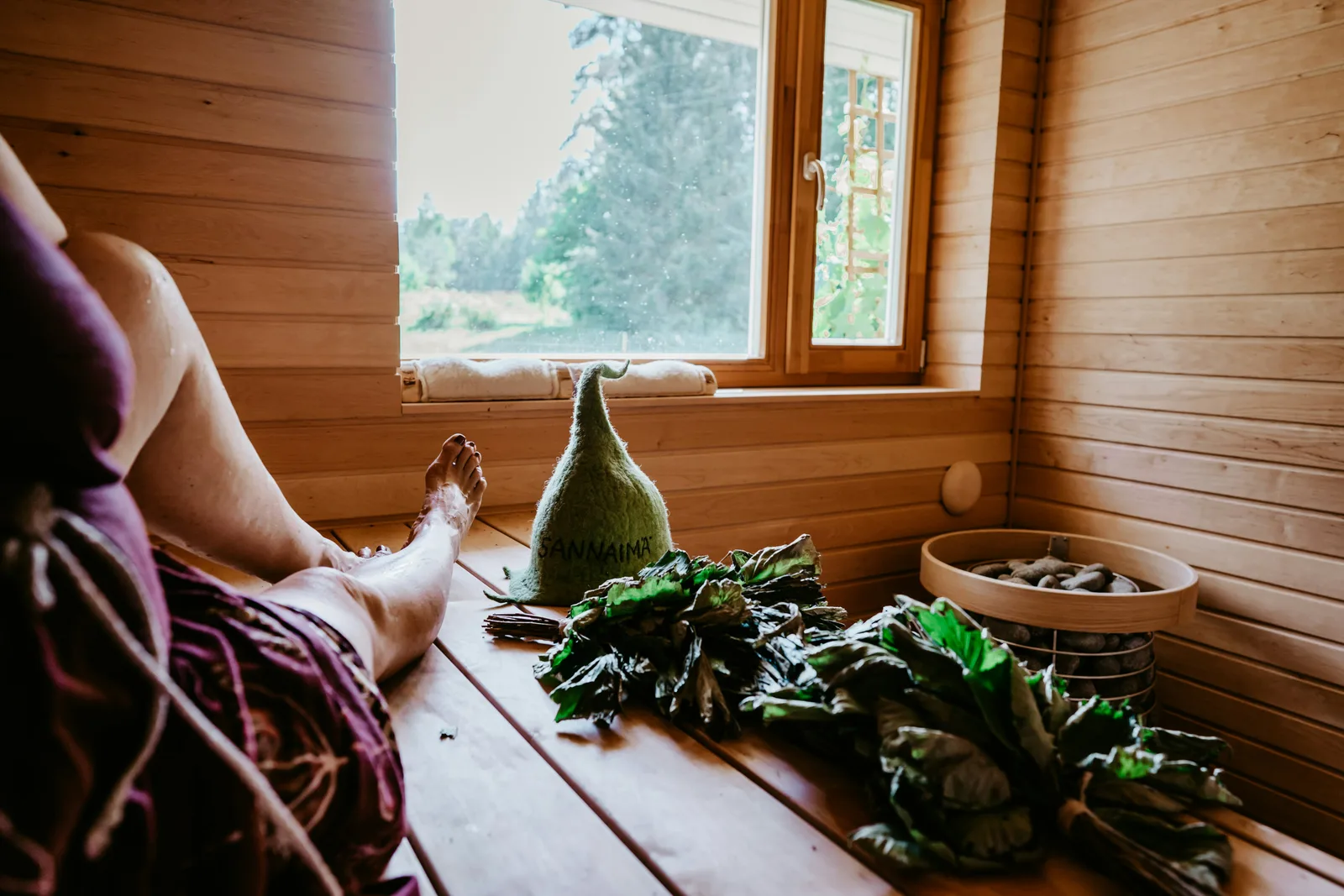
A vihta is a whisk of birch branches, usually silver or downy birch, cut in early summer when the leaves are young and soft, bound at the handle with a strip of bark or a twist of branch. Fresh, it smells overwhelmingly of birch. Soaked in warm water for a few minutes in the sauna it becomes supple, and the leaves hold water.
Then you use it: slapping or brushing your shoulders, back, arms, and legs in the heat, and often someone else's back, since your own is hard to reach. The Finnish verb is vihtoa, and a session with one is vihtominen.
What it does
Three things, none mystical.
Circulation. The slapping brings blood to the skin surface in the same way a massage does, and in a hot room the skin is already flushed, so the effect is immediate: a warm, tingling glow that lasts through the cold plunge.
Steam. The wet leaves carry water, and every slap throws a little of it onto skin that is far cooler than the air around it. It is löyly applied directly. The heat in the moment feels stronger, and the birch scent fills the room.
Skin. The leaves and the water take sweat and loosened skin with them. Finns will tell you it is better than any scrub. It is at least as good as one.
Whether it does anything beyond that is folk medicine. It feels excellent, and that has been reason enough for a few thousand years.
Vihta or vasta
Ask a Finn what the birch whisk is called and you may start a debate. In western Finland it is a vihta. In eastern Finland it is a vasta. Both are correct and both are standard Finnish, according to Kotus, the Institute for the Languages of Finland, which also notes that vasta is widely used in Central and North Ostrobothnia, so the split is roughly west against east with Ostrobothnia mixed. Everyone knows both words, and each half of the country is quietly certain the other half is wrong. The argument has been running for as long as anyone has recorded it: a recent University of Eastern Finland survey found the boundary almost exactly where Kustaa Vilkuna's dialect map placed it in the early 1930s, with vihta concentrated in Southwest Finland, Häme, and South Ostrobothnia. If you are unsure, use whichever word the person next to you used.
How they are made
The right time is around midsummer, in June, when the leaves are full but still tender. Branches about half a metre long, cut from the lower crown of a young tree, with plenty of leaf and no dead wood. Twenty or thirty branches, laid with the leaves facing the same way, a few bent inward to make the whisk full, the handle end stripped and bound tight.
A fresh vihta is used once or twice and then dried, hung in a shed or a cool room. Dried ones are soaked in hot water for ten minutes before use and last for months, which is how there are birch whisks in Finnish saunas in February. Many people freeze them instead, which keeps the scent better. A cottage sauna in winter with a thawed midsummer vihta smells like June.
Birch is standard. Oak (tammi) is tougher and longer lasting. Juniper (kataja) is sharp and stimulating and not for the faint-hearted. Eucalyptus is a modern import that smells like a cough sweet and clears the sinuses.
Etiquette
Whisk yourself. Whisk a friend or a family member if they ask. Do not whisk a stranger, and in a public sauna keep the water off your neighbours. Rinse the vihta and hang it up after. Do not put a dry one straight onto a bench, since the leaves crumble. Never use one on the stones.
The vihta is also the one part of sauna culture that a watch does not love. The slapping is fine, but slapping the wrist with wet leaves at speed is a good way to send false taps to a screen and a spike to a heart rate sensor. Whisk around it, or take the watch off for the vihta and put it back on for the plunge.
What it looks like on a heart rate chart
A vihta round is a short, sharp effort. The arm movement, the löyly effect from the leaves, and the rush of blood to the skin combine into a bump on top of the sauna climb; in our own sessions it is typically in the order of 10 to 20 bpm, similar to a ladle of water on the stones but lasting as long as you keep going. That is a Furolog observation, not a study result, and part of it is the arm movement itself confusing the sensor. Afterwards the drop in the cold water feels deeper, because the skin is warmer to begin with. If you log a session with and without, the difference is easy to see.
Read next: Löyly: the steam of a Finnish sauna · Types of Finnish sauna, from smoke to electric · Finnish sauna terms
Sources
- Institute for the Languages of Finland (Kotus). "Vasta ja vihta."
- University of Eastern Finland. "Idässä käytetään vastaa ja lännessä vihdotaan."
Quick answer
- Vihta (or vasta): a whisk of young birch branches, soaked, used to slap the skin in the sauna.
- What it does: circulation, direct steam on the skin, exfoliation, and birch scent. It feels wonderful.
- When: made at midsummer, used fresh or dried and soaked, or frozen for winter.
- Watch: whisk around it, or take it off for the vihta.