Furolog
Löyly: the steam that makes a Finnish sauna a sauna
Löyly is the burst of steam when water hits the stones, and the word once meant spirit or breath. What it does to the room, to your heart rate, and how to throw it without annoying anyone.
Updated September 4, 2026
Ask a Finn what makes a good sauna and the answer will not be the temperature. It will be the löyly. The word has no English equivalent, and the Japanese ロウリュ is a loan of the same word, so it is worth understanding properly.
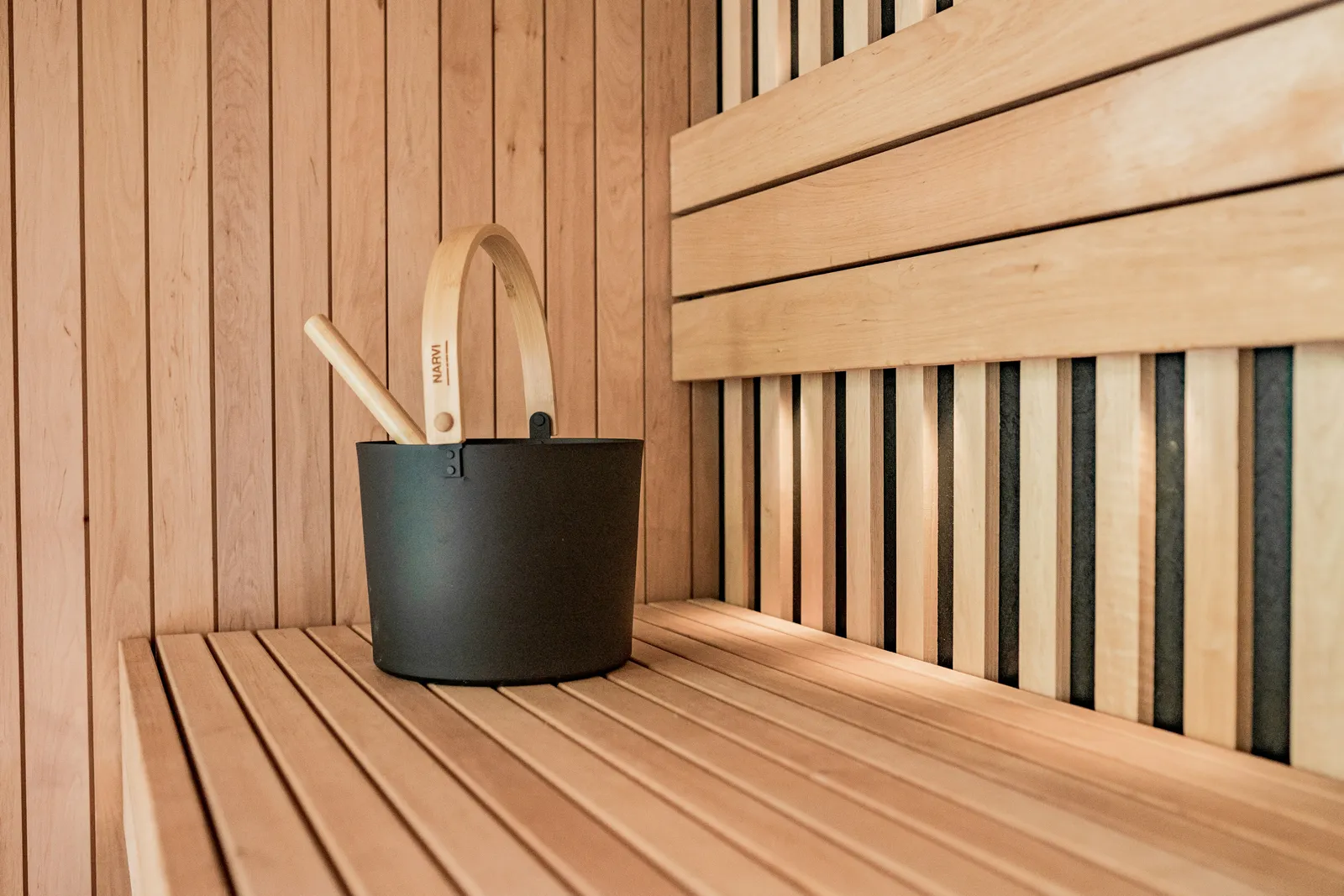
Löyly is the burst of steam that rises when water is thrown onto the hot stones of the kiuas, and by extension the quality of the heat in the room. The air temperature barely moves; the humidity jumps, sweat stops evaporating, and the room feels much hotter for a minute or two. Soft löyly comes from a large mass of stone at a moderate temperature, hard löyly from a small, very hot stove. Ask before you throw, and refill the bucket.
What does löyly mean?
Löyly (pronounced roughly "LUH-oo-lu") is the steam that rises when you throw water onto the hot stones of the kiuas, the sauna stove. That is the everyday meaning. The older meaning is closer to spirit or breath: UNESCO's description of Finnish sauna culture defines löyly as "the spirit or steam released by casting water onto a stack of heated stones", and describes the sauna as a traditionally sacred space. Finns did not choose a mystical word for steam; the steam and the spirit were the same idea for a very long time.
In practice, löyly is also used to mean the overall quality of the heat in the room. "Hyvät löylyt", good löyly, means the heat is soft, even, and pleasant. "Kova löyly", hard löyly, is sharp and stinging. That quality depends on the stove and the stones far more than on the number on the thermometer, which is why a cooler sauna with a big wood stove can feel better than a hotter one with a small electric heater. Visit Finland's guide puts the typical Finnish room at 70 to 90°C and says the focus is on the löyly, not the number.
What actually happens when you throw water
The stones in a kiuas sit at several hundred degrees. When water hits them it flashes to steam within a second and rises. The air temperature in the room barely changes, but the humidity jumps, and that is what you feel. Your skin cannot evaporate sweat into air that is already saturated, so heat that was leaving your body suddenly is not, and the room feels dramatically hotter for a minute or two.
On a heart rate chart this shows as a spike on top of the gradual climb. In our own sessions a single ladle in a hot room typically lifts heart rate in the order of 10 to 20 bpm within half a minute, and it settles as the steam dissipates; that is a Furolog observation, not a study figure. Three ladles in a row on the top bench is a different matter. If you are tracking your sessions you will learn quickly how many ladles is your number.
Two cautions for anyone wearing a watch. First, the burst of steam is the hottest and wettest event in the room, so drop your wrist below bench level for the minute after a throw. Second, the reading in that minute is as likely to be sweat under the sensor as your heart, so do not read too much into it. See sauna heart rate: what is normal for the rest of the curve.
Soft löyly and hard löyly
The difference is the stones. A stove with a large mass of stones at a moderate temperature produces steam that arrives as a gentle wave and lingers. A small stove with few stones at a very high temperature produces a hiss and a sharp, short blast that stings the ears. Wood stoves with a large mass of stone give soft löyly almost by default. Small apartment electric heaters with a shallow tray of stones tend toward hard löyly, and the fix is fewer ladles, more often.
Water temperature matters less than people think. Warm water flashes slightly faster, cold water pulls a little heat from the stones, but the difference in the room is small. What matters more is throwing it across the stones rather than onto one spot, so it flashes evenly instead of pooling and boiling.
Scents are a small industry: birch (koivu), tar (terva), eucalyptus, pine. A few drops in the bucket, never straight onto the stones. Beer on the stones is a thing people do once, and the smell of burnt sugar is why they do it once.
Löyly etiquette
In a Finnish public sauna the person sitting nearest the stove usually holds the ladle, and the unwritten rule is to ask before throwing: "Saako heittää?" (may I throw?). Anyone can say no or ask for a moment. When someone new enters, give them a minute on the bench before the next throw. Do not throw for the person who is about to leave. When the bucket is empty, refill it; the last person out does not leave an empty kiulu.
The German Aufguss ritual, with towel waving and a designated master, is a different tradition. Finnish löyly is self-service, unhurried, and quiet. Nobody performs it.
Löyly in Japan
Until recently most Japanese saunas were dry, electric, and hot, with no water anywhere near the stones. That has changed fast. ロウリュ is now common, and オートロウリュ, an automatic pour on a timer, is standard in newer facilities. The difference from Finland is mostly control: in Japan the machine decides when the steam comes, in Finland the people on the bench do.
If your sauna has an auto-löyly, it is worth noting the time and watching what it does to your heart rate. The pattern is the same as a hand-thrown ladle, just on a schedule. Furolog marks sauna segments by heart rate, so a session with auto-löyly every fifteen minutes shows as a saw-tooth climb, each tooth a pour.
Read next: Kiuas: the sauna stove explained · Vihta: the birch whisk in the sauna · Finnish sauna terms · Saunatonttu: the sauna elf
Sources
- UNESCO. "Sauna culture in Finland." Representative List of the Intangible Cultural Heritage of Humanity, 2020.
- Visit Finland. "Your guide to Finnish sauna."
Quick answer
- Löyly: the steam from water on the stones, and by extension the quality of the heat. The word also means spirit.
- What it does: humidity up, sweat evaporation down, room feels much hotter for a minute or two. Heart rate spikes briefly and settles.
- Soft vs hard: more stone mass, moderate temperature, water spread across the stones. Small hot stoves sting.
- Etiquette: ask before throwing, give newcomers a minute, refill the bucket.