Furolog
Kiuas: the sauna stove, and why it matters more than the temperature
Wood, electric, or smoke. Continuous or once-heated. A heap of stone or a thin tray. The kiuas decides what kind of heat you get, and a Finn will judge a sauna by it before anything else.
Updated September 4, 2026
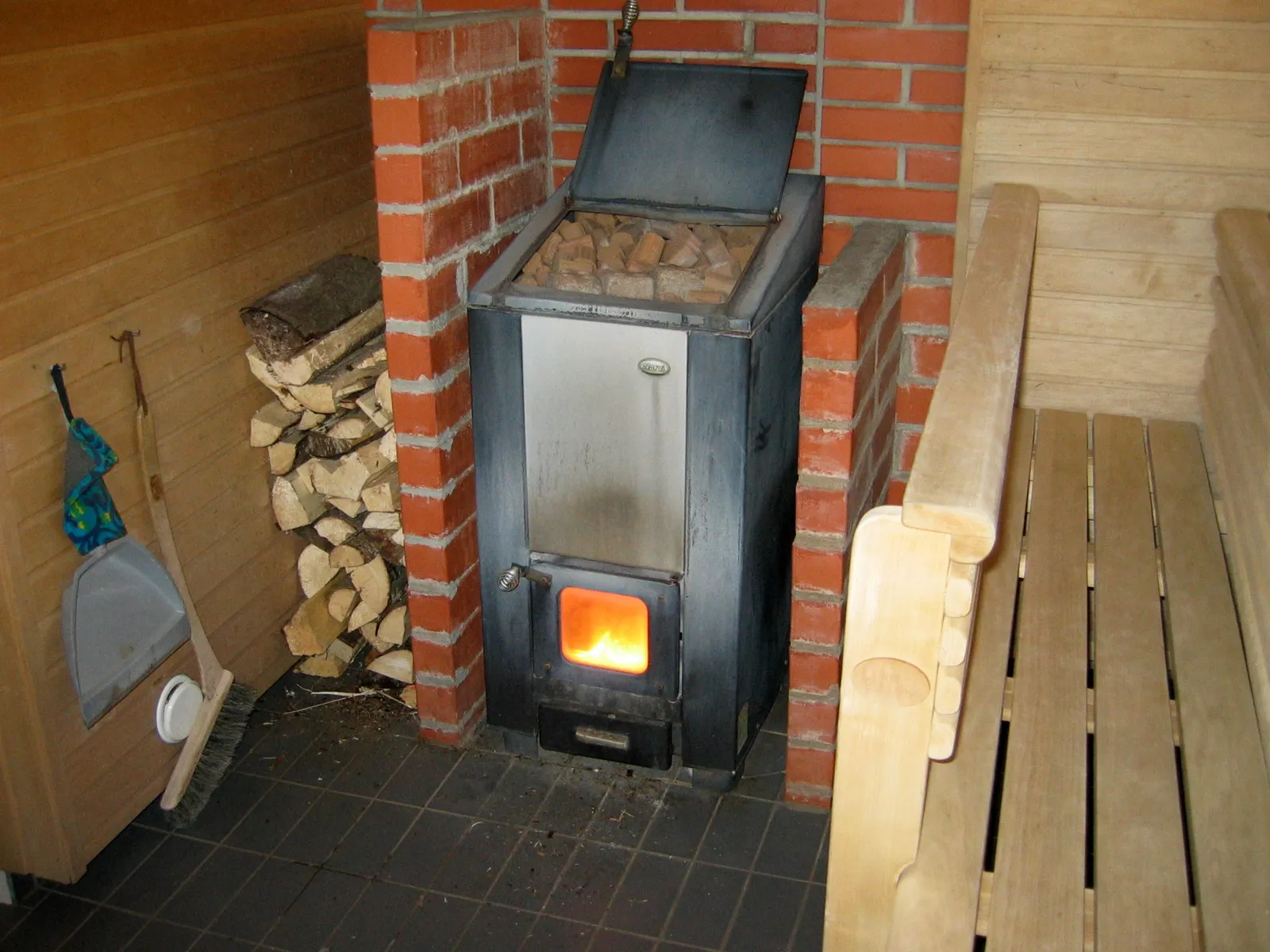
The thermometer on the wall tells you one number. The kiuas, the stove, decides everything else: how soft the heat is, how the löyly behaves, how long it takes to be ready, and what the room smells like. Here is what to look for, and what each type does to a session.
A kiuas is the sauna stove: a wood fire, electric elements, or, in a smoke sauna, a chimneyless fire, with a pile of stones on top. The stones store the heat and turn thrown water into löyly, the steam that UNESCO's description of Finnish sauna culture calls "the spirit or steam". More stone means softer, longer-lasting steam, which is why a Finn looks at the kiuas before the thermometer.
What is a kiuas?
Every kiuas is a heat source with a pile of stones on top. The heat source can be a wood fire, electric elements, or, in a smoke sauna, a fire with no chimney at all. The stones are the point: they store the heat, even it out, and turn thrown water into löyly. A kiuas with more stone mass holds more heat and gives a gentler, longer-lasting steam. A kiuas with a thin layer of stones over hot elements gives a sharp hiss and a short blast.
The stones themselves are typically dark, dense volcanic rock such as olivine diabase, chosen because it survives thousands of cycles of being heated to several hundred degrees and doused. They crack and crumble eventually, and a well-kept sauna replaces them regularly. Crumbled stones are the most common reason a familiar sauna starts to feel harsh.
Wood-burning (puukiuas)
The original, and still the standard at cottages and lakeside saunas. A firebox with the stones above or around it, a chimney, and an hour or two of feeding it before the room is ready. Wood stoves carry tens of kilograms of stone, far more than a small electric wall heater, so the löyly is soft and the heat radiates from the metal body as well as the stones. The room keeps warming for a while after the fire dies down.
The feel is what Finns mean by a proper sauna. The 70 to 90°C that Visit Finland gives as typical, humidity you control with the ladle, a faint smell of birch smoke. Heating one is part of the ritual: chopping, stacking, lighting, checking. Nothing about it is fast.
Electric (sähkökiuas)
What almost every Finnish apartment has, and what most saunas outside Finland use. Elements under a basket of stones, a thermostat, and in our experience half an hour to an hour to heat. Modern electric heaters range from small wall units with a few kilograms of stone to tall pillar heaters, like the ones from IKI or Harvia, that hold as much stone as a wood stove and behave almost like one.
The stone mass is the whole difference. A small heater gets the air to 90°C quickly but has little stored heat, so each ladle of water cools the stones and the löyly comes out hard. A pillar heater with a large stone column gives a soft, wood-like löyly from electricity. If you are choosing a sauna to visit or a heater to buy, look at how much stone it holds before you look at the wattage.
Smoke sauna (savusauna)
The oldest form. A large stove with no chimney is fired for the better part of a day; the smoke fills the room and escapes through a vent, blackening every surface. When the fire has burned down and the smoke has cleared, the room is ready, warmed entirely by the stored heat in a huge mass of stones. Nothing is burning while you bathe.
The heat is the softest there is: cooler than a wood sauna, deep, even, and the löyly from that much stone is a slow wave rather than a blast. The room smells of tar and woodsmoke, and you leave with a little soot on your skin. Smoke saunas are rare because of the labour and the fire risk, so public ones like the city-run smoke saunas at Kuusijärvi near Helsinki or the Jätkänkämppä at Rauhalahti in Kuopio, billed as the world's biggest with room for about 60 to 70 bathers, are destinations in their own right.
Continuous vs once-heated
Finns also divide stoves by how they are used. A continuously heated stove (jatkuvalämmitteinen) is kept burning or switched on while you bathe, like most wood and all electric heaters. A once-heated stove (kertalämmitteinen) is heated fully in advance and then left to give up its stored heat, like a smoke sauna or some large old wood stoves. Once-heated saunas have the most stone and the softest heat, and they slowly cool through the evening, which is why the first bathers get the hottest room and the last get the gentlest.
What the kiuas does to your heart rate
In our own sessions, a hot, dry, low-mass electric sauna raises heart rate quickly and evenly, because the air is very hot and stays that way. A cooler wood or smoke sauna raises it more slowly, but each ladle produces a larger spike, because there is more stone to make more steam. Across many logged sessions the wood sauna has tended to show a lower peak and a longer, calmer climb, even when the session was longer. That is observation from our own charts, not a study.
Which one is better for you is a matter of what you want from the session, and the honest answer is that the softer heat is the one most people can stay in long enough to reach the state they came for. How to read those curves is in sauna heart rate: what is normal.
The kiuas in Japan
Most Japanese saunas run electric or gas heaters, hot and dry, often with little stone and, until recently, no water; the Consumer Affairs Agency's 2024 notice puts most Japanese sauna rooms between 50 and 100°C. The newer facilities built around ロウリュ have started installing large-stone heaters, and a few have wood stoves and even smoke saunas. If a place advertises a Finnish-made kiuas, it is usually a sign they care about the löyly. Look for the brand names: Harvia, IKI, Narvi, Helo, Tulikivi.
Read next: Löyly: the steam of a Finnish sauna · Types of Finnish sauna, from smoke to electric · Finnish sauna terms · Saunatonttu: the sauna elf
Sources
- UNESCO. "Sauna culture in Finland." Representative List of the Intangible Cultural Heritage of Humanity, 2020.
- Visit Finland. "Your guide to Finnish sauna."
- City of Vantaa. "Vantaa's Kuusijärvi."
- Spa Hotel Rauhalahti. "Jätkänkämppä Lumberjack Lodge & Smoke Sauna."
- Consumer Affairs Agency of Japan. "サウナ浴での事故に注意" News release, 5 Jun 2024.
Quick answer
- Kiuas: the stove. Fire or elements below, stones above. The stones are the point.
- Wood: an hour or two to heat, tens of kilograms of stone, soft löyly, the standard at cottages.
- Electric: under an hour to heat, anything from a thin tray of stones to a full pillar. Stone mass decides the feel.
- Smoke: no chimney, most of a day to heat, the softest heat of all, rare.
- Rule of thumb: more stone, softer heat, better sauna.